
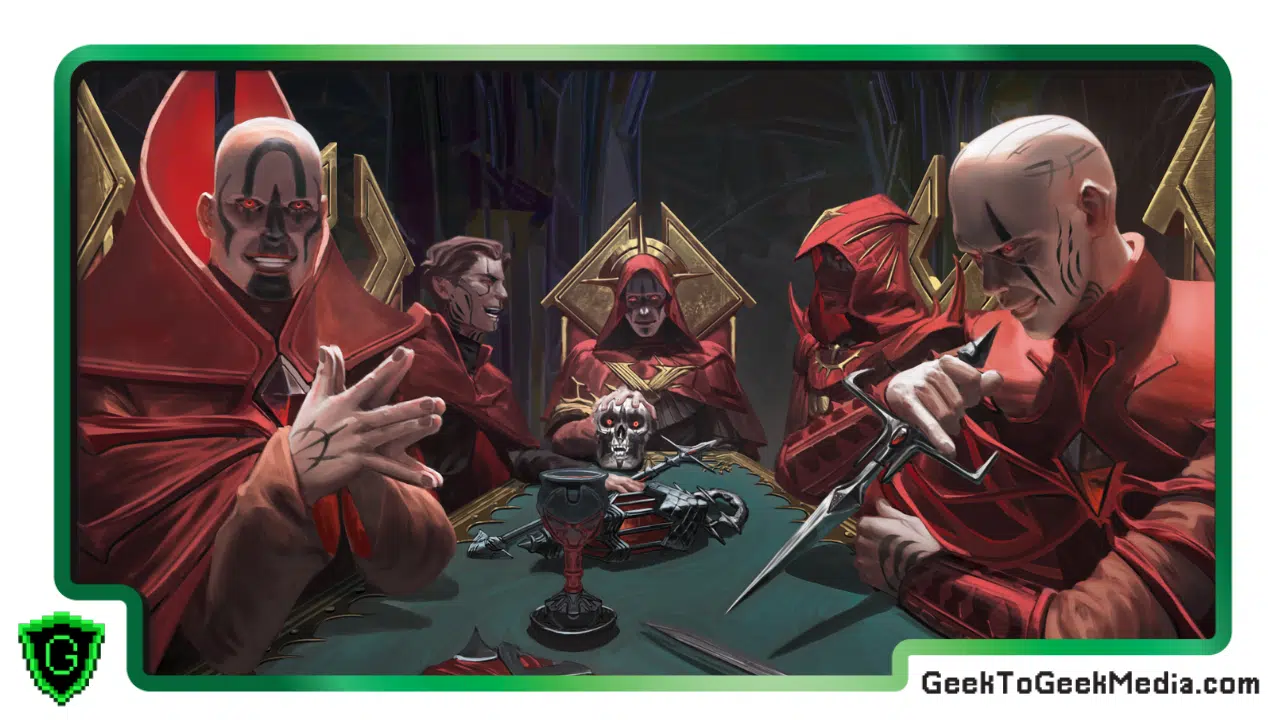
Sometimes I open a D&D sourcebook, flip through it, and immediately start mentally stealing things. Arcana Unleashed is one of those books.
This is pretty much exactly what I want from a gameplay expansion: subclasses I want to try, feats I can see showing up on actual characters, magic items I want to hand out, organizations I can drop into existing campaigns, monsters to throw at my players, and a bunch of little systems that make magic feel like a larger part of the world instead of just something adventurers do between long rests.
Its companion book, Arcana Unleashed: Deadfall, is a somewhat different story. Not necessarily a bad one. Just one that isn't particularly for me.
Our friends at Wizards of the Coast have been good enough to provide Geek to Geek Media a copy of Arcana Unleashed and Deadfall for review. It has not impacted the outcome of this review.
Arcana Has, In Fact, Been Unleashed]

The 160-page Arcana Unleashed starts with character options and doesn't really stop handing you stuff after that.
There are eight subclasses, including the Arcana Domain Cleric, Arcane Archer Fighter, Warrior of the Mystic Arts Monk, Vestige Patron Warlock, and four Wizard subclasses covering Conjuration, Enchantment, Necromancy, and Transmutation. There are also 10 backgrounds, almost 30 feats, more than 30 new and revised spells, magical factions, group patrons, piles of magic items, magical creatures, and even a short level-one adventure.
And I like pretty much all of it.
The subclasses are probably going to get the most immediate attention from players, and I'm especially happy to see things like the Necromancer and Arcane Archer getting another pass. But some of my favorite material is actually tucked into the less flashy sections.
The feats, for instance, give players considerably more ways to make magic part of a character who isn't necessarily just Wizard McWizardface. Familiar-focused options can turn magical companions into a much more substantial part of a build, while the school-specific Adept feats let characters reach outside their normal spell options. Other reviewers have highlighted the feats as one of the strongest mechanical parts of the book, and I can absolutely see why.
But the factions may be the thing I use most.
Give Me More Factions Like These
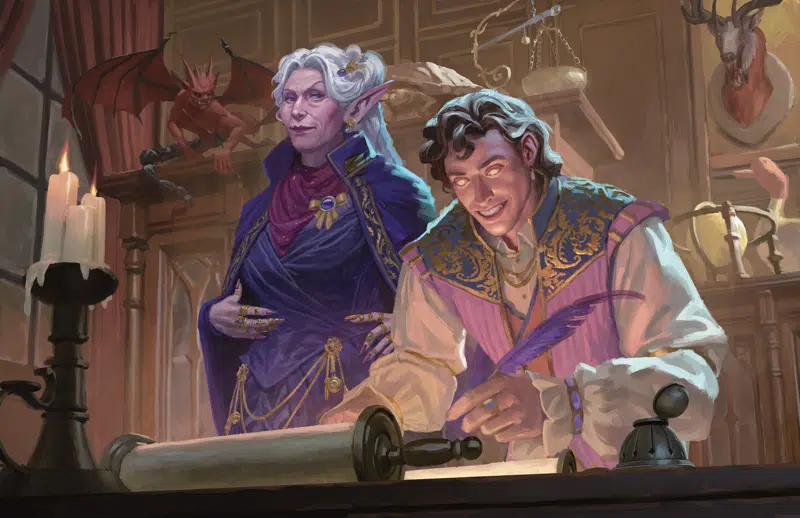
There are nine magical factions, and instead of being a couple paragraphs of lore that I read once and promptly forget, they're tied into backgrounds, Renown, rewards, relationships, and unique Bastion facilities. hat's the good stuff.
The Crucible Keepers are basically magical storm chasers who study catastrophes while apparently possessing the survival instincts of people who see a magical volcano erupt and say, "We should get closer."
The Covenant of the Grave approaches necromancy from a much more thoughtful direction. The Horizon Weavers mess around with planar travel. The Ninth Quill deals in espionage, stolen artifacts, and magical secrets.
And I can use all of that.
That's what kept occurring to me while reading Arcana Unleashed. I don't need to build a campaign around the book. I can just start transplanting pieces into the games I'm already running.
Other reviews have zeroed in on these factions, too. Wargamer called them some of the book's most exciting material, while RPGBOT praised the combination of worldbuilding, mechanical rewards, and actual campaign utility.
Magic Items That Actually Grow With You
Having evolving magic items is another idea I love.
Rather than finding a cool weapon at level 4 and tossing it into a Bag of Holding six levels later because something with a bigger number came along, these items can change and become more powerful alongside the character.
Arcana Unleashed includes premade examples as well as rules for creating your own and deciding when evolution happens. I am a gigantic sucker for this kind of mechanic.
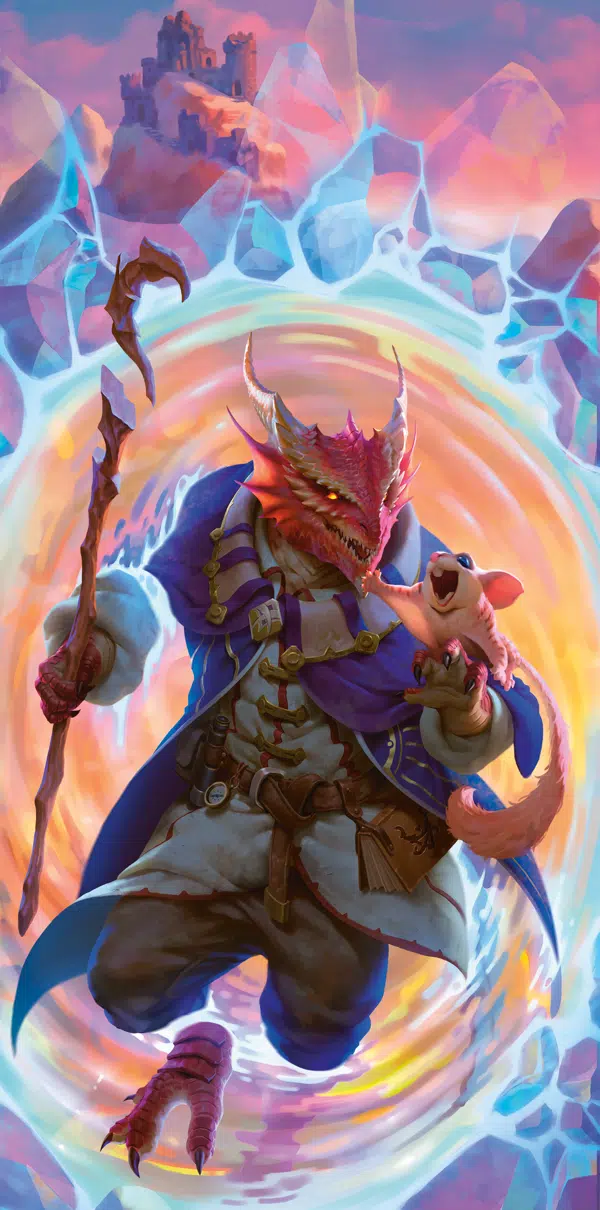
Magic items are more interesting when they become part of a character's story instead of interchangeable equipment slots, and tying their growth to what happens during a campaign gives a DM another way to reward characters without just handing them increasingly shiny loot.
Between that, the factions, character options, spells, patrons, and creatures—including Living Spells, Darkenbeasts, specialized Archmages, the Baelnorn, and even freaking Venger from the 80s cartoon!—there is a tremendous amount here I intend to use.
That's about the highest praise I can give a D&D supplement.
I finished reading it wanting to play D&D.
And Then There's The Campaign, Deadfall
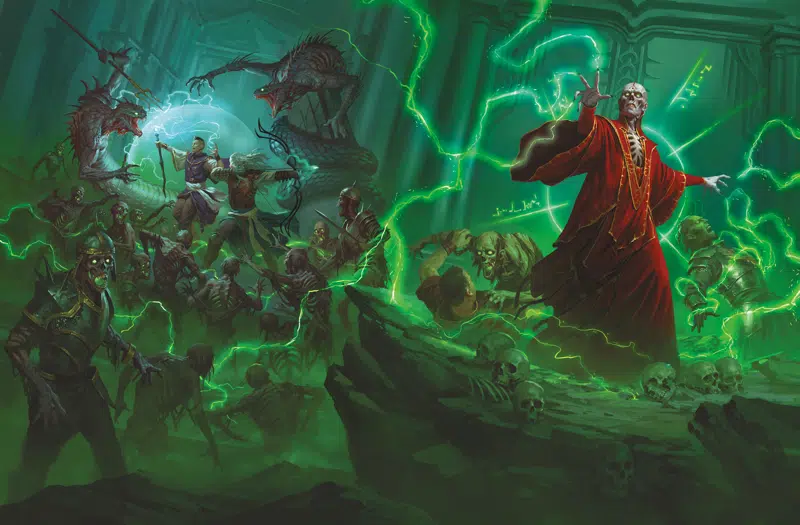
Arcana Unleashed: Deadfall is a 128-page campaign that takes characters from levels 11 through 20 and sends them into Thay as covert operatives attempting to stop Szass Tam from unleashing a demonic undead army. Which is objectively a pretty awesome sentence.
The book also gives us something I've wanted more of from D&D for ages: actual high-level adventures.
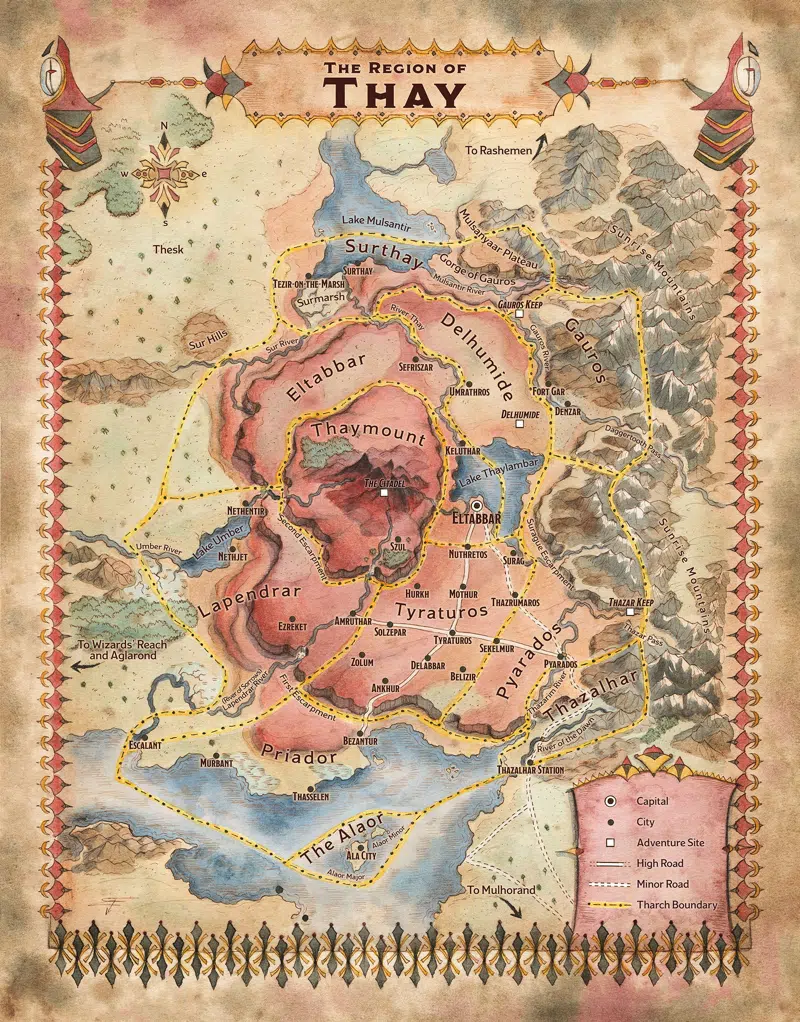
There's a 24-page gazetteer of Thay, information about the Zulkirs and the country's political structure, 14 magic items, six high-CR stat blocks including Szass Tam, and more than 20 maps.
Honestly, the Thay material might be the part I'm most likely to use.
The gazetteer gives enough information about Eltabbar, the tharchs, Red Wizard society, and Thay's magical politics that even reviews cooler on the adventure itself have generally found something to like there.
The actual campaign, however, is a magical spy thriller.
And that's where it loses me.
Your Mission, Should You Choose to Accept It
Deadfall has an actual secrecy subsystem rather than simply telling the DM to make everything feel spy-ish.
Fail badly enough or expose the operation, and consequences start piling up: allies can be targeted, enemies become more alert, and eventually characters themselves can become compromised. From there, they may have to destroy evidence, fake deaths, or otherwise repair their cover.
That's clever.
I also don't particularly want to run it.
This isn't me saying the mechanics don't work. In fact, reviewers who enjoy espionage campaigns have singled them out as one of Deadfall's best ideas. D&D Fanatics praised both the secrecy system and the freedom players have in approaching individual missions, while The Gaming Gang appreciated Wizards trying a campaign structure that wasn't simply fight-room-fight-room-trap-fight.
But spy thrillers aren't really my thing, and keeping track of compromised identities, secrecy failures, covert objectives, and clandestine operations isn't something that sounds particularly fun for me behind the DM screen.
I'm much more of a "there's an ancient ruin over there and probably something terrible inside it, so let's go poke it" kind of DM (and player).
Your mileage may vary. Quite a lot, very probably.
From some of the stuff I've read around the internet, I don't think I'm completely alone here, though.
But I also wouldn't tell someone who loves intrigue, espionage, and covert operations to skip Deadfall. There's plenty of evidence that tables looking specifically for that style of D&D may have a blast with it.
It's just not the campaign I'd choose to run.
Two Very Different Kinds of Magic
Taken together, the two Arcana Unleashed books land very differently for me.
Deadfall has useful Thay material, and it's definitely a fun read. It gives Dungeons & Dragons desperately needed support for levels 11–20, and tries something genuinely different with a magical espionage campaign. I respect the experiment considerably more than I personally want to run it.
But Arcana Unleashed itself? Yeah. I'm going to be using this book.
The subclasses, feats, magical factions, evolving items, monsters, and worldbuilding material are exactly the kind of modular toys I want from a D&D supplement. I don't need to restructure a campaign around them. I can just start stealing. And I fully intend to.
Arcana Unleashed: 4.5 out of 5 suspiciously powerful familiars.
Deadfall: 3 out of 5 compromised cover identities.
Looking to read more about D&D 5.5e? Check out Geek to Geek's look at Ravenloft: The Horrors Within!

